
L'art floral japonais : Guide du débutant en ikebana
Japanese flower arranging (Ikebana) is a unique Japanese art form infused with the spirit of "Zen" and the aesthetic of subtraction. Beyond its role as simple decoration, it offers spiritual richness by allowing you to face your inner self. This article provides a comprehensive guide for beginners living abroad—from historical background to selecting tools and basic techniques—so you can start today. Let’s bring a quiet time of conversing with flowers into your life, away from the hustle and bustle of the everyday.
Table des matières
Qu'est-ce que l'Ikebana, l'art floral japonais ?

Literally, "Ikebana" means "living flowers" or "flowers kept alive"—signifying the act of making the lives of plants shine. Unlike Western decoration, which builds beauty by filling space with flowers, the Ikebana approach observes the inherent "life" and "individuality" of plants to draw them out to the fullest. Using not just vivid petals, but also the curves of branches, the expressions of leaves, and sometimes even withered grass, it condenses nature and the changing seasons into a single vessel.
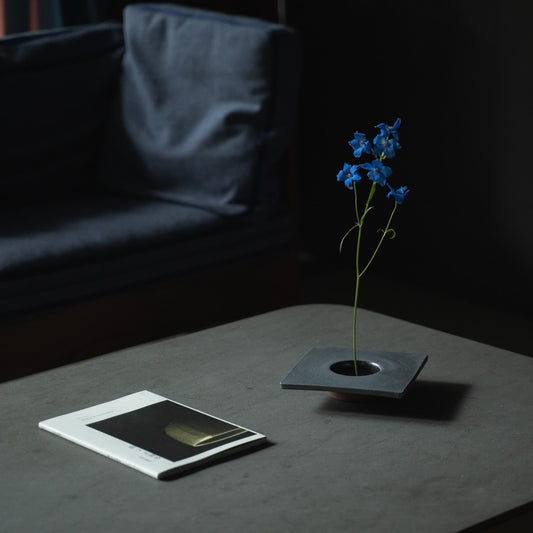
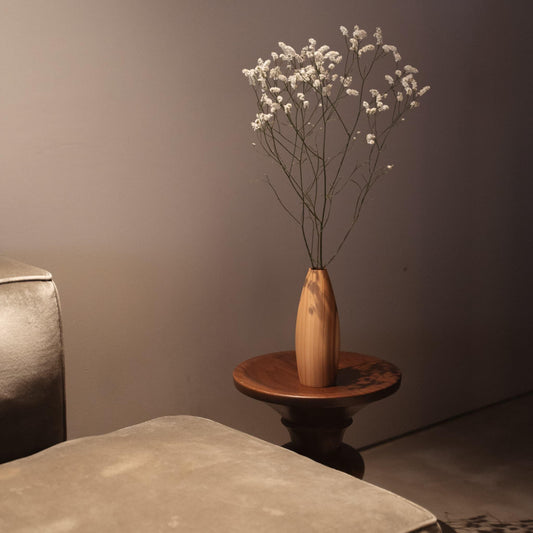
L'essence de l'Ikebana réside dans la gestion de l'« Espace ». Plutôt que d'accumuler les matériaux, cet art privilégie la création d'un « Ma » (espace négatif) audacieux. Cet espace silencieux fait ressortir les lignes et le mouvement d'une seule fleur, stimulant l'imagination du spectateur. Cette « esthétique de la soustraction » rejoint l'esprit du Zen et apporte un apaisement profond, semblable à la pleine conscience moderne, à travers le temps passé face à la nature en silence.
Furthermore, Ikebana is a "Do" (The Way)—a path of self-cultivation and consideration for others, not just creative art. It encompasses the entire process: settling one's mind before arranging, handling tools with care, and the spirit of "Omotenashi" (Hospitality) toward the viewer. Decorating a single flower in the entryway to welcome a guest sends a silent message: "I have prepared a comfortable space for you." Ikebana is a communication tool that cultivates the heart beyond the pursuit of beauty.
Histoire de l'art floral japonais

Origins: Prayer to Gods and Nature Worship
Les racines de l'Ikebana remontent à l'arrivée du bouddhisme au VIe siècle. La coutume bouddhiste du « Kuge » (offrande de fleurs devant le Bouddha) a constitué le fondement spirituel de l'art floral. Parallèlement, dans l'ancienne croyance japonaise « Shinto », on pensait que les dieux habitaient la nature. Les rituels consistaient à installer des conifères en guise de « Yorishiro » (objets où s'établissent les esprits), favorisant une sensibilité japonaise unique qui trouve un caractère sacré dans les plantes. À cette époque, les fleurs étaient des outils de prière sacrée, et non de simples objets de décoration.
Fondation de Kado : L'architecture et la naissance de la forme
In the Muromachi period (14th–16th centuries), flower arranging established its status as the art of "Kado" (The Way of Flowers). This development was deeply connected to the "Shoin-zukuri" architectural style and the birth of the "Tokonoma" (alcove), a special display space. Since the Tokonoma is viewed from the front, flower arrangements required a frontal composition. The monks of the Ikenobo lineage in Kyoto systematized the theory, establishing a foundation that expressed the providence of nature rather than just beautiful decoration.

Styles luxueux : « Rikka », l'expression de la nature grandiose
In the late 16th century, as samurai warlords seized power, flower arrangements evolved dynamically to match the grand halls of castles. The style perfected during this time is "Rikka" (Standing Flowers). This complex style attempts to reproduce landscapes like mountains and waterfalls, or the order of the universe, within a single vase. Composed of 7 or 9 main branches (Yakushi) standing vertically, this style symbolized the authority of the rulers of that time. Ikebana transcended personal pleasure to become an art requiring high technique and philosophy.
Vulgarisation et simplicité : l'esthétique du concept « Ciel, Terre, Homme »
Entering the peaceful Edo period (17th–19th centuries), Ikebana spread from the privileged class to the general public. The "Shoka" (Living Flowers) style was devised as a simple form suitable for the smaller homes of commoners. It consists of three main branches forming an asymmetrical triangle representing "Heaven," "Earth," and "Man." This concept remains widely known abroad as a basic rule of Ikebana today. Many schools emerged, and the publication of manuals solidified its status as a popular hobby.

Evolution to Modernity: Fusion with Western Culture and Free Expression
From the Meiji period (late 19th century) onward, Ikebana underwent dramatic changes under the influence of Western culture. To suit Western-style rooms, the Ohara School invented "Moribana" (Piled Flowers), using shallow bowls (Suiban) and "Kenzan" (flower frogs) to arrange flowers in a spread-out manner. This made Ikebana freer and more colorful. After the war, it developed further as avant-garde art, unconfined by materials or forms. Today, it is a global art form enjoyed worldwide while maintaining its traditional spirituality.
Lien avec le Zen (bouddhisme)

La raison pour laquelle l'Ikebana est appelé « Kado » (la Voie des Fleurs) et s'est imposé comme un chemin d'entraînement spirituel est due à la forte influence du bouddhisme zen. Incarnant l'enseignement zen du « Mushin » (l'esprit vide), le temps passé à arranger les fleurs devient une « méditation en mouvement » où l'on évacue les distractions quotidiennes pour se concentrer profondément sur la vie qui se trouve devant soi. L'acte d'équilibrer une seule fleur rejoint le travail d'équilibrage de son propre esprit ; la valeur essentielle de cet art réside dans ce processus d'introspection au cœur du silence.
Esthétique de la soustraction et de l'impermanence. L'esprit zen de « Simplicité » et de « Tranquillité » se reflète dans le style visuel sous la forme d'une « Esthétique de la soustraction ». En dépouillant les branches et les feuilles superflues jusqu'à la limite et en utilisant l'espace vide (« Ma »), la vitalité de la plante est mise en valeur. De plus, en s'appuyant sur l'enseignement bouddhiste du « Mujo » (Impermanence), on trouve une beauté précieuse non seulement dans les pleines floraisons, mais aussi dans les bourgeons et les branches flétries. Cette attitude consistant à accepter les cycles de la nature tels qu'ils sont constitue une spiritualité profonde cultivée à travers l'Ikebana.

Différences par rapport à l'art floral occidental

The fundamental difference lies in the approach to beauty. While Western flower arrangement is an "Aesthetics of Addition," filling space with colorful flowers, Ikebana is based on the "Aesthetics of Subtraction," removing unnecessary elements to the limit. While Western styles often value volume that fills the space, Ikebana dares to create empty space, or "Ma" (Negative Space). This void is a crucial element that highlights the presence of the flowers and stirs the viewer's imagination.
Composition and material selection also contrast. Western arrangements often favor geometric, symmetrical stability. In contrast, Ikebana pursues asymmetrical balance to express the imperfect beauty found in nature. Additionally, while Western styles focus on blossoms, Ikebana regards branches and leaves—and sometimes withered plants—as important structural elements. A major characteristic is the emphasis on the "Line" and life force possessed by the plant, rather than showing mass and color, to reproduce a natural landscape within the vessel.
Les types d'art floral japonais

There are many schools of Japanese flower arranging, but styles are broadly classified into "Traditional Forms" and "Modern Free Forms." The optimal method differs depending on the vase used, the display location, and the spirituality one wishes to express. Here, we introduce five representative styles beginners should know. Understanding their characteristics will help you find the style that suits you.
Rikka (Fleurs dressées)

Le Rikka est le style le plus ancien et le plus formel, établi durant l'époque de Muromachi. Il vise à condenser et à exprimer le paysage de la nature majestueuse ainsi que l'harmonie de l'univers au sein d'un seul vase. Il possède une structure architecturale très complexe, symbolisant les montagnes, les rivières et les cascades à l'aide de végétaux. Ce style est principalement préservé par l'école Ikenobo.
Its structure consists of 7 to 9 main branches called "Yakushi," each with strict rules regarding placement and length. While it typically requires high technical skill and spiritual discipline, making it suited for advanced practitioners, its majestic appearance is truly "living sculpture." It is often displayed at traditional Buddhist ceremonies or formal occasions.
Shoka (Fleurs vivantes)

Shoka, established in the Edo period, is a style that expresses the "life force" of plants as they grow from the ground. Simplified compared to Rikka, it reflects the "Aesthetics of Subtraction," utilizing the natural curves and inherent individuality ("Shussho") of the plants to the fullest. It is a foundational style in many schools.
The basic structure consists of three main branches: "Shin," "Soe," and "Tai." These represent the elements of the world—"Heaven," "Earth," and "Man"—and are characterized by drawing a beautiful "Asymmetrical Triangle" when viewed from the front. Though simple, it requires an ultimate sense of balance.
Style libre

Freestyle allows the arranger to express their sensibility freely, unbound by traditional forms or rules. It evolved to match modern lifestyles and spaces other than the traditional alcove (such as living rooms, offices, or stages). Schools like Sogetsu actively promote this style.
It sometimes combines foreign materials like iron, plastic, or dried driftwood with floral materials, enjoying Ikebana as "Modern Art." Its greatest appeal is that beginners can work on it casually, exercising creativity with a sense of "playing with flowers" without worrying about formalities.

Il s'agit d'un style relativement récent conçu par l'école Ohara pendant l'ère Meiji pour s'adapter aux fleurs et à l'architecture occidentales. Il tire son nom de l'accumulation de fleurs dans un récipient large et peu profond appelé « Suiban ». C'est le style le plus adapté aux conditions d'habitation modernes.
Its defining feature is the use of a "Kenzan" (flower frogs) to fix the flowers. This makes it easier for beginners to secure flowers where they want them, making it ideal for reproducing natural scenery on a table. Rich in color and closest in sensation to Western flower arrangement, it is very popular overseas.
Nageire (fleurs jetées)

Natural Atmosphere: This style involves arranging flowers in a tall vase as if they were thrown in naturally. Without using a Kenzan, it utilizes the natural curves of the stems and their hanging movement, valuing a natural appearance that does not defy gravity. Also called "Heika," it is studied in many schools.
Casual Beauty Supported by Technique: Although it looks casual, it uses techniques such as "Cross-bar fixing" (Jumonji-dome) to secure stems inside the vase. Because it can dynamically enhance a space with few materials, it offers deep expression despite its simplicity.
Hanaisho

This is a new style devised by the Ohara School to harmonize with modern living spaces. It is characterized by its compactness and modernity, suitable for display anywhere, such as on a dining table or shelf. Systematized to be beautiful with few materials, it is an "easy to learn" style most suitable for beginners to learn first.
Basically, there are two forms: the "Rising Form" (Tateru-katachi), where the main stem stands straight, and the "Inclining Form" (Katamukeru-katachi), which tilts to create width. While traditional Ikebana assumes viewing from one direction, Hanaisho allows for compositions that are beautiful from multiple angles and pairs perfectly with modern interiors and colorful Western flowers.
Comment débuter l'art floral japonais

You might worry, "Doesn't starting Ikebana require years of training?" However, once you grasp the basics, anyone can enjoy it at home starting today. There are two main styles beginners should tackle first. One is "Moribana," using a shallow container (Suiban) and a Kenzan. The other is "Nageire," arranging flowers in a tall vase.
"Nageire," in particular, can be finished stylishly using the natural curves of branches with just a simple cylindrical vase and no special skills. Regarding tools for fixing flowers, "needle-less types" that are safe for beginners have appeared recently, significantly lowering the barrier to entry compared to difficult traditional kenzans. Start by enjoying the time facing the flowers without being too bound by form.

L'ikebana peut être commencé immédiatement avec un « vase » de base et un « kenzan » pour fixer les fleurs. Il n'est pas nécessaire de s'équiper d'outils coûteux dès le départ. Nous expliquons ici comment choisir des outils faciles à manipuler pour les débutants et qui pourront être utilisés pendant longtemps.
Vase Ikebana

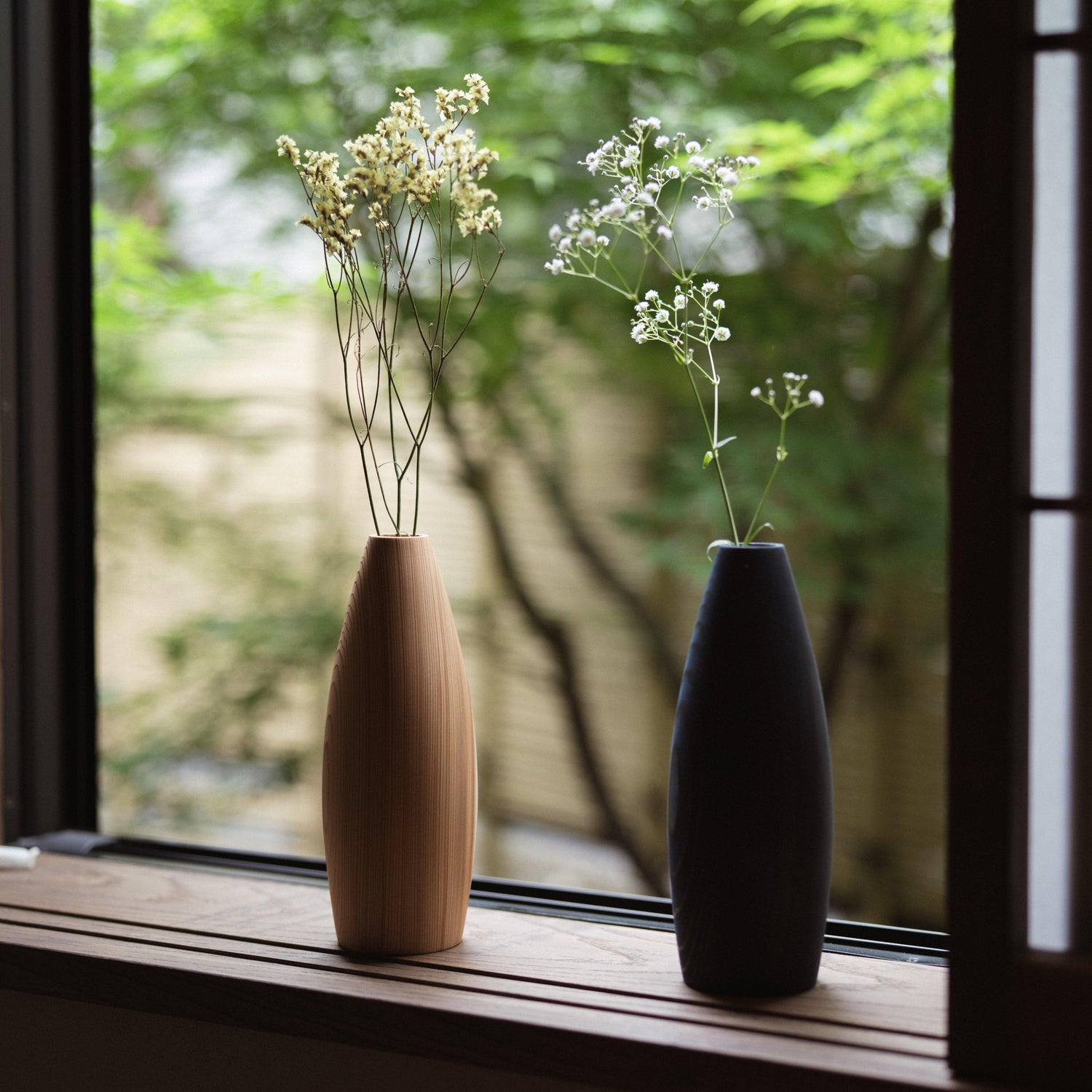
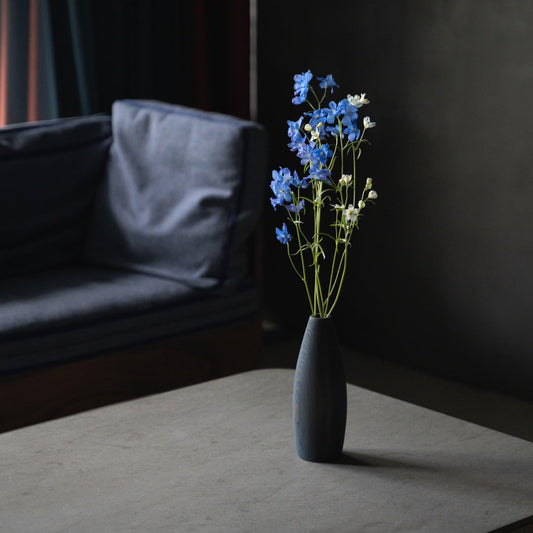
Vous n'avez pas besoin d'acheter immédiatement des récipients spécialisés coûteux. Pour votre premier achat, un "Simple Cylinder Vase" or a "Suiban" (Shallow container) est recommandé. Un vase cylindrique, en particulier, s'adapte partout et s'intègre parfaitement aux intérieurs modernes, convenant ainsi aux styles d'habitation occidentaux.
Les vases cylindriques sont adaptés au style « Nageire ». Choisir un modèle droit avec une ouverture pas trop large aide à stabiliser les tiges avec peu de matériel, vous permettant de dresser des branches magnifiquement sans technique particulière. D'un autre côté, un Suiban est essentiel pour le « Moribana », car il permet d'exprimer l'ampleur et la fraîcheur en laissant apparaître la surface de l'eau. Pour commencer, privilégiez des textures en céramique blanche, noire ou mate qui s'accordent avec n'importe quelle fleur.
Ciseaux à Ikebana

First, you need specialized scissors to cut stems and branches cleanly. Japanese "Hasami" are designed differently from general stationery scissors, allowing you to cut thick branches with light force. Sharpness is most important. A clean cut prevents crushing the plant's water-conducting vessels, improving water absorption and making the flowers long-lasting.
Beginners don't need to buy expensive pro tools immediately; gardening shears are a fine substitute. When choosing, check if the size fits your hand and if the material is rust-resistant. The crisp sound of using good scissors becomes part of the ritual of spiritual concentration in Ikebana.
Kenzan (Pique-fleurs)

Essential for fixing flowers in the intended spot is the "Flower frog." Traditionally used in Japan is the "Kenzan," a metal base with countless needles. While useful for firmly supporting flowers in a Suiban, it can be difficult for beginners, requiring force to pierce thick branches and carrying a risk of injury from the needles.


Préparation : Mizukiri (coupe dans l'eau)
Always perform "Mizukiri" before arranging. This is a technique of cutting stems underwater in a bowl or bucket. Cutting stems without exposing the cut end to air prevents air from entering the vessels, helping the flower absorb water (Mizusage). This significantly improves the longevity of your work.
Basic Structure: Creating a Scalene Triangle
The basis of Ikebana is composition using three main branches called "Yakushi."
Tibia (Tige principale) : The longest branch, forming the central line of the work. Length should be about 1.5 to 2 times the height of the vase, placed slightly tilted from the vertical.
Soe (Tige secondaire) : About 3/4 the length of Shin. Placed to support Shin, spreading diagonally.
Tai / Hikae (Tige de support) : Environ 1/2 à 3/4 de la longueur du Shin. Placé le plus bas et le plus en avant pour resserrer l'ensemble de la composition.
La règle d'or consiste à les disposer de manière à ce que, lorsque les pointes des trois branches sont reliées, elles forment un « triangle scalène » (triangle asymétrique) lorsqu'elles sont vues de dessus. La création d'une asymétrie génère du mouvement et de la profondeur.
Finition :
Jushi (Remplissage) Une fois que la structure des trois tiges principales est terminée, ajoutez des fleurs ou des feuilles plus courtes appelées « Jushi » (remplissage) entre elles. Utilisez-les pour dissimuler le kenzan ou la base (Nejime) ou pour ajuster l'équilibre spatial. Cependant, il est important de ne pas trop remplir. Laisser du « Ma » (espace) souligne une beauté naturelle, comme si le vent circulait à travers la composition. Insérez-les dans le kenzan pour le style Moribana, ou utilisez le rebord et les parois intérieures du vase comme points d'appui pour équilibrer le style Nageire.
Conseils d'amélioration

Esquisse : Before you start arranging, draw a simple picture. Just drawing the lines of the vase and branches clarifies the image (composition) of the finished form. Simulating the balance of "Shin-Soe-Tai" on paper allows you to use your scissors without hesitation.
Imitation : Lorsque vous apprenez par vous-même, l'observation de photos professionnelles ou de manuels est très efficace. Essayez de reproduire la forme d'une œuvre qui vous plaît, même si vous changez les matériaux floraux. Par l'imitation, vous acquerrez naturellement le sens du « Ma » (l'espace vide) et de « l'angle des branches ».
Photographie :
Pour profiter davantage de l'art floral japonais

Once you understand the basic tools and methods, let's step into the deeper world of Ikebana. Japan has many "Schools," each with its own unique philosophy and aesthetics. Also, knowing the beautiful "Japanese Terminology" associated with flower arranging adds spiritual depth to your work. Here, we introduce knowledge to enrich your Ikebana life.
Écoles d'art floral Ikebana

Les trois grandes écoles : Ikenobo, Ohara et Sogetsu. Il existe de nombreuses écoles d'Ikebana au Japon, mais les « trois grandes écoles » ont une présence écrasante en termes d'histoire, d'envergure et d'influence. Savoir quel style vous attire est la première étape pour débuter l'Ikebana. Nous présentons ici les trois écoles les plus représentatives.
Ikenobo : l'origine de l'Ikebana

École Ohara : Moderniser avec le Moribana

École Sogetsu : Libre expression et art

Termes japonais utilisés dans l'Ikebana

Mots liés à l'espace et à la composition
Ma (Espace négatif) : This refers to the space "between things," but it is not merely an "empty place." It contains atmosphere, presence, and tension. In Ikebana, the empty parts (Space) without flowers are considered as important as the parts with flowers to achieve overall harmony.
Yohaku (Espace vide) : Similar to "Ma," but refers to space left open more physically and boldly. By not filling the view and daring to leave parts empty, it stirs the viewer's imagination and allows them to feel a lingering resonance ("Aftertaste").
Hikizan no Bi (Aesthetics of Subtraction):
Mots liés à l'esthétique et à la spiritualité
Wabi-Sabi: Un cœur qui trouve une beauté profonde dans les choses incomplètes, simples et patinées par le temps. Il chérit la saveur discrète des branches flétries ou des tiges courbées plutôt que la beauté éclatante.
Mujo (Impermanence): Le concept bouddhiste selon lequel « toutes les choses sont éphémères ». Les fleurs s'épanouissent pour finir par se faner. L'Ikebana capture ce moment fugace de la vie et exprime un cœur qui accepte le changement.
Ichigo-ichie (Once-in-a-lifetime encounter):
Mots liés à l'atmosphère et à la dignité
Iki (Chic) : Being refined and sophisticated. It includes a coolness that shows dedication effortlessly, combining tradition with modern smartness.
Yugen (Grâce subtile) : A deep, mysterious beauty that cannot be fully expressed in words. It refers to a sensibility that feels the presence and lingering emotion behind what is clearly visible.
Miyabi (Elegance):
Dans l'univers de l'art floral japonais, on peut ressentir le souffle de la nature s'épanouir à travers une seule fleur. Ne réfléchissez pas trop. Commencez par préparer votre vase préféré ainsi que des fleurs de saison, et faites confiance à votre propre sensibilité pour les disposer. Ce qui importe, c'est le processus de tête-à-tête avec la fleur elle-même, plutôt que la création d'une forme parfaite. Ce moment de calme apporte une paix profonde et de la couleur à votre quotidien. Dès aujourd'hui, commencez votre propre expérience unique de l'Ikebana.